Which Aluminum Extrusion Alloy Should You Choose: 6061 vs 6063 for Your Project?
2026-11-08 · CRYJT · views 1
Why Does the Choice Between 6061 and 6063 Aluminum Extrusion Matter?
For overseas procurement engineers sourcing aluminum components, selecting the right alloy is critical for performance, cost, and manufacturability. The 6061 and 6063 aluminum extrusion alloys are two of the most common, each with distinct properties that make them a good fit for different applications. Understanding their differences ensures you get components that meet your project's requirements without unnecessary expense or performance compromises.
Key Criteria for Selecting Between 6061 and 6063
The primary distinction lies in strength, machinability, and corrosion resistance. 6061-T6 offers higher strength and excellent corrosion resistance, making it well suited for structural applications and outdoor use. It is commonly used in architectural profiles and marine hardware. 6063-T5, on the other hand, provides good strength, excellent surface finish potential, and is recommended for decorative and automotive applications where extrusion complexity is key.
- 6061-T6: Stronger, better corrosion resistance, lower machinability.
- 6063-T5: Softer, easier to machine, better surface finish, good strength for extrusion.
How to Specify Your Aluminum Extrusion Requirements
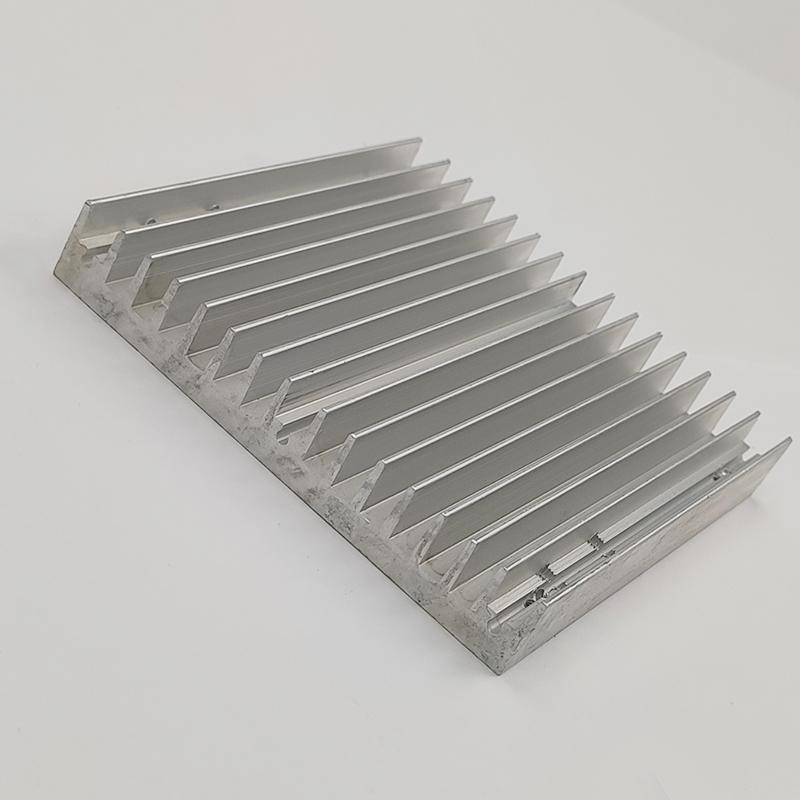
When specifying, start with the intended use. For high-load applications, 6061-T6 is the recommended choice. For aesthetic or complex-profile needs, 6063-T5 may be preferable. Always confirm dimensions—fin pitch (e.g., 2.0 mm (0.08 in)), fin height (e.g., 25.0 mm (0.98 in)), and base thickness (e.g., 6.0 mm (0.24 in))—against the drawing or sample. Anodizing can enhance 6063-T5's finish but does not alter the fin geometry.
Common Pitfalls to Avoid
Overlooking the trade-off between 6061's strength and 6063's machinability can lead to incorrect component selection. Also, assuming anodizing improves structural performance is a mistake; it's purely a surface treatment. For precision requirements, ensure the manufacturer offers skived fin heat sinks or CNC-machined parts as needed. All dimensions must be verified against drawings or samples, not generalized ranges.
For custom aluminum extrusion profiles tailored to your exact needs, Foshan Chuangrongyao Metal Products Co., Ltd. can produce components to drawing with samples. Contact Mr. Huang at +86 150 9995 1623 or info@cryjt.com for inquiries.
FAQ
Keep reading
Have a project to evaluate? Send us the drawing.
Request a Quote