Does Black Anodizing Improve Heat Dissipation for Aluminum Heat Sinks?
2026-11-07 · CRYJT · views 1
Why Does Anodizing Color Matter for Heat Sinks?
Overseas procurement engineers often evaluate heat sinks based on thermal performance and aesthetics. Anodizing not only provides a protective layer but also offers color options like black. The primary question is whether this aesthetic choice impacts the heat sink's ability to dissipate heat effectively.
Key Criteria for Evaluating Heat Sink Performance
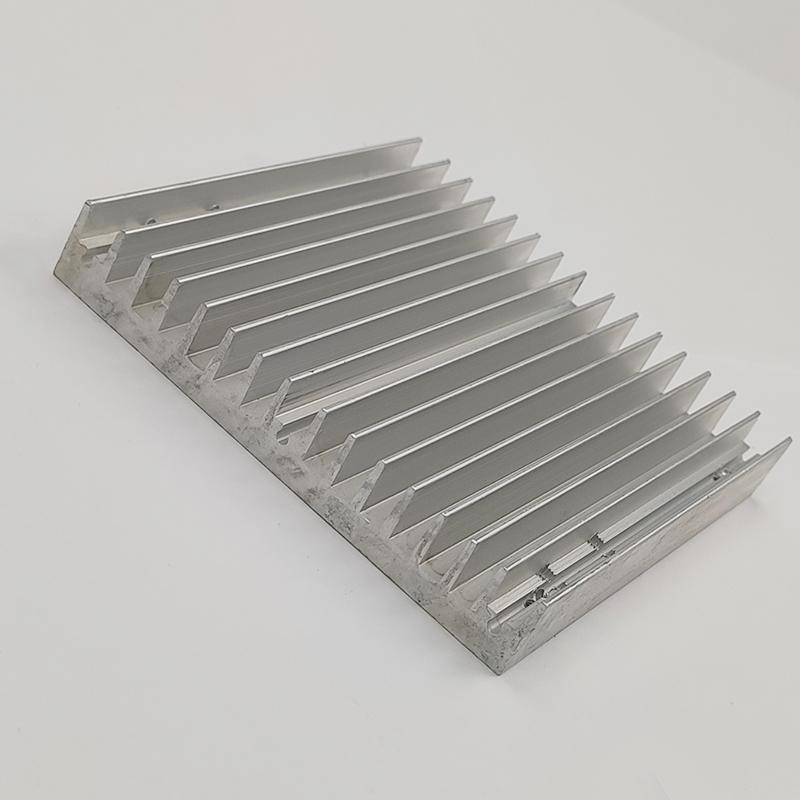
The effectiveness of a heat sink depends on material properties, fin design, and base thickness. For skived fin heat sinks, the blade shaving process creates an integral structure with minimal thermal resistance. Bonded or staked fins, while less expensive, introduce interface resistance that can limit performance. Extruded heat sinks offer cost efficiency but have limitations on fin height-to-pitch ratios. The core criteria are material composition (typically 6063-T5 for extrusion and 6061-T6 for machined parts), fin geometry (pitch, height, thickness), and base material properties.
How to Specify Heat Sinks with Anodizing
When specifying a heat sink with black anodizing, focus on the following:
- Material grade: 6061-T6 or 6063-T5 confirmed against the drawing or sample.
- Fin dimensions: Pitch (e.g., 2.0 mm (0.079 in)), height (e.g., 25.0 mm (0.984 in)), and thickness (e.g., 0.5 mm (0.020 in)) confirmed against the drawing or sample.
- Anodizing depth: Black anodizing adds a surface layer (typically 10-30 µm (0.00039-0.00118 in)) but does not alter fin geometry.
Common Pitfalls in Heat Sink Sourcing
Overlooking the impact of anodizing on thermal performance is a common mistake. While black anodizing slightly reduces surface reflectivity, enhancing radiative heat transfer, its effect is minor compared to material and fin design. Another pitfall is assuming bonded or staked fins offer the same performance as skived fins for high-power applications. Additionally, neglecting vibration resistance in high-vibration environments can lead to premature failure.
Final Recommendation for Procurement Engineers
For most applications, black anodizing does not significantly impair heat dissipation but provides a professional finish. Ensure critical dimensions (fin pitch, height, base thickness) are confirmed against drawings or samples. If custom parts are needed, Foshan Chuangrongyao Metal Products Co., Ltd. can manufacture skived fin heat sinks, aluminum extrusion profiles, and CNC-machined parts to drawing with samples. Contact Mr. Huang at +86 150 9995 1623 or info@cryjt.com for inquiries.
FAQ
Keep reading
Have a project to evaluate? Send us the drawing.
Request a Quote