How to Choose the Right Fin Pitch for Your Skived Heat Sink?
2026-11-07 · CRYJT · views 1
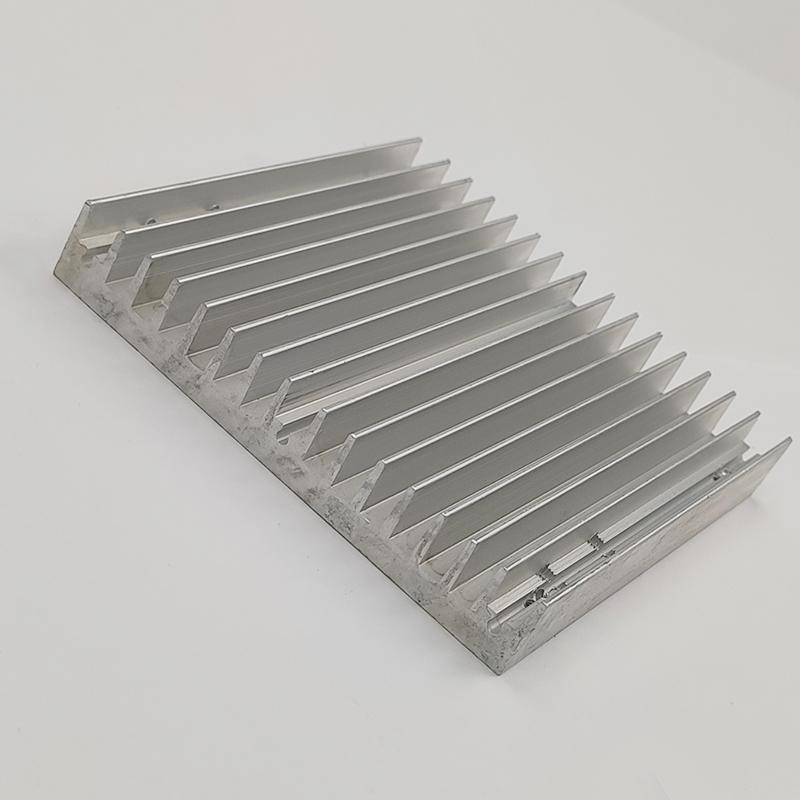
Why Does Fin Pitch Matter for Skived Heat Sinks?
Fin pitch directly impacts the heat dissipation efficiency and airflow characteristics of a skived heat sink. A tighter pitch increases surface area for heat rejection but may restrict airflow, while a wider pitch enhances airflow but reduces surface area. Selecting the appropriate balance is essential to meet your thermal management requirements without compromising performance or cost.
Key Criteria for Selecting Fin Pitch
The primary considerations include the target thermal resistance, available airflow, and the power density of the application. High-power applications often benefit from a tighter pitch (e.g., 2.0 mm (0.08 in) to 2.5 mm (0.1 in)) to maximize heat dissipation, whereas low-power or high-airflow scenarios may use wider pitches (e.g., 3.0 mm (0.12 in) to 4.0 mm (0.16 in)) to avoid airflow restrictions.
- Thermal resistance target: Tighter pitch for lower thermal resistance.
- Available airflow: Wider pitch for higher airflow needs.
- Power density: High power density requires tighter pitches.
How to Specify Fin Pitch Correctly
Always confirm the fin pitch against the drawing or sample. Specify the metric value first (e.g., 2.5 mm (0.1 in)), and provide the imperial equivalent in parentheses. Include the base thickness and fin height to ensure the design meets your spatial and thermal constraints. For custom requirements, our company, Foshan Chuangrongyao Metal Products Co., Ltd., offers skived fin heat sinks tailored to drawings, with samples available upon request.
Common Pitfalls to Avoid
Overlooking the trade-off between fin density and airflow can lead to overheating or excessive fan noise. Similarly, neglecting the base thickness can result in structural weaknesses. Always validate the design with prototypes and consider the operating environment, such as vibration or dust exposure, which may influence the suitability of a tight pitch. For precision hardware and custom extrusions, our capabilities include CNC-machined parts and aluminum extrusion profiles to complement skived heat sinks.
| Criteria | Recommendation |
|---|---|
| High-power density | Tighter pitch (e.g., 2.0 mm (0.08 in)) |
| High airflow availability | Wider pitch (e.g., 3.0 mm (0.12 in)) |
FAQ
Keep reading
Have a project to evaluate? Send us the drawing.
Request a Quote