Which Heat Sink Type Is Right for Your Application: Skived Fin vs. Bonded Fin?
2026-11-07 · CRYJT · views 1
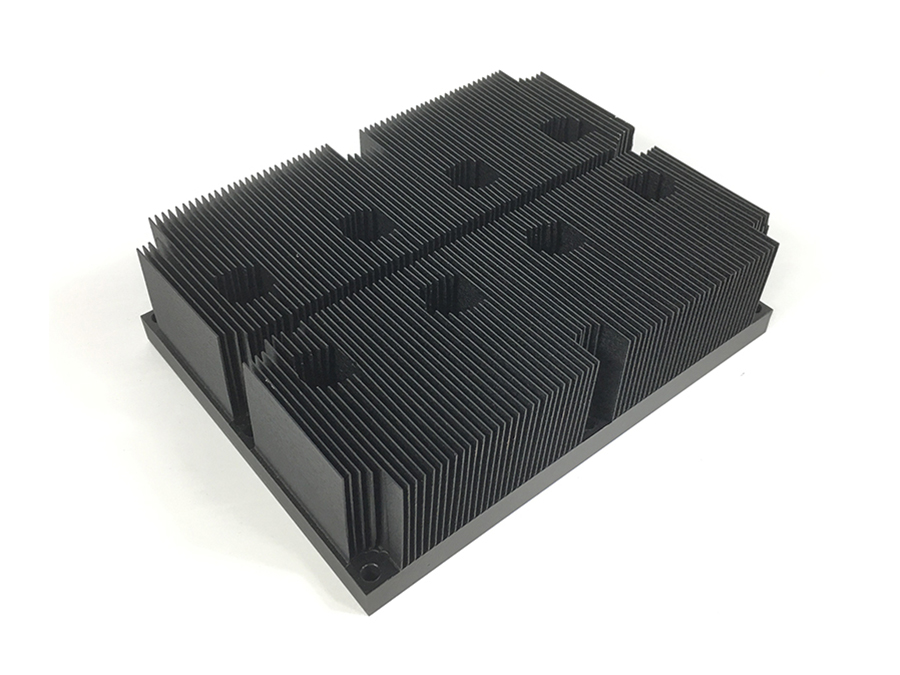
Why Choose the Right Heat Sink Type?
Heat sinks are critical for managing component heat, especially in dense electronic assemblies. Selecting the correct type—skived fin or bonded/staked fin—is essential for performance and reliability. The wrong choice can lead to overheating or unnecessary costs. Understanding the differences helps procurement engineers specify components that meet thermal requirements efficiently.
Key Criteria for Selecting Heat Sink Types
The primary factors to evaluate are thermal performance, cost, and application conditions. Skived fin heat sinks offer superior thermal performance due to their monolithic construction, which eliminates interface thermal resistance. Bonded/staked fins are generally less expensive but introduce potential resistance at the connection point, making them less ideal for high-power or high-vibration environments.
How to Specify Heat Sink Requirements
When specifying, focus on design parameters like fin pitch (e.g., 2 mm (0.08 in.)), fin height (e.g., 25 mm (0.98 in.)), and base thickness. Always confirmed against the drawing or sample for accuracy. Material selection is also important: 6063-T5 aluminum is common for extrusion, while 6061-T6 is often used for CNC-machined parts. Anodizing improves durability but does not alter fin geometry.
Common Pitfalls to Avoid
Overlooking vibration resistance is a key mistake when choosing bonded/staked fins. These are not recommended for high-vibration applications due to the risk of connection failure. Additionally, assuming extrusion can achieve very high fin density without performance trade-offs is incorrect; die constraints limit the fin height-to-pitch ratio. Always validate thermal performance through testing, even if specifications seem adequate.
Final Recommendations for Procurement
For high-power applications requiring optimal thermal performance, skived fin heat sinks are a good fit. For cost-sensitive, low-to-moderate power uses, bonded/staked fins may be a good fit, but evaluate vibration risks carefully. Custom components can be custom-made to drawing with samples; for inquiries, contact Mr. Huang at +86 150 9995 1623 or info@cryjt.com.
FAQ
Keep reading
Have a project to evaluate? Send us the drawing.
Request a Quote