Skived vs Bonded Fin Heat Sinks: Which Should You Specify?
2026-11-06 · Editorial · views 52
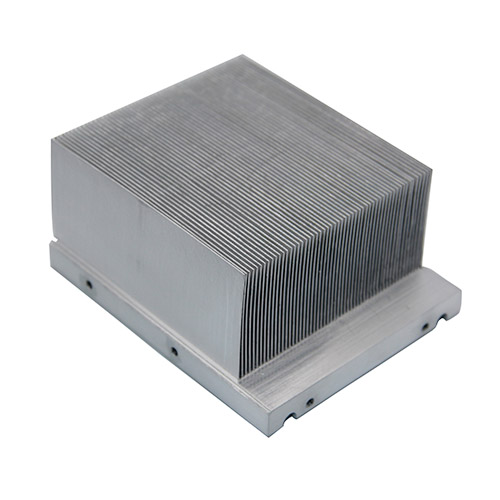
Short answer: if the heat flux is high or the assembly will see vibration, specify skived. If the load is moderate and the budget is tight, bonded fins can still work — as long as you accept a joint in the thermal path.
What skiving actually does
Fins are cut from the same billet as the base. There is no adhesive, no solder and no weld line at the root, so heat crosses one continuous piece of aluminum. That is the whole advantage, and it is why skived parts hold up under vibration.
Where bonded fins win
Bonded and glued-fin sinks allow very high fin density and tall fins at lower tooling cost. For lower heat flux and cost-sensitive products they remain a reasonable choice. The trade-off is joint resistance and long-term reliability under thermal cycling.
How to decide
| Consideration | Skived | Bonded / glued |
| Thermal path | Continuous metal | Joint at the root |
| Vibration | No loosening risk at root | Joint can degrade |
| Fin density | Practical range around 1.5-4 mm pitch | Can go denser |
| Tooling cost | Higher per design | Lower |
| Best fit | High heat flux, harsh duty | Moderate load, cost-driven |
What to send us
Heat load, airflow available, envelope and mounting pattern. With those four we can recommend a construction and quote a sample. Tolerances and fin geometry are confirmed against your drawing.
FAQ
Keep reading
Have a project to evaluate? Send us the drawing.
Request a Quote