Understanding T-Slot Aluminum Profile Standards for Your Next Project
2026-11-08 · CRYJT · views 1
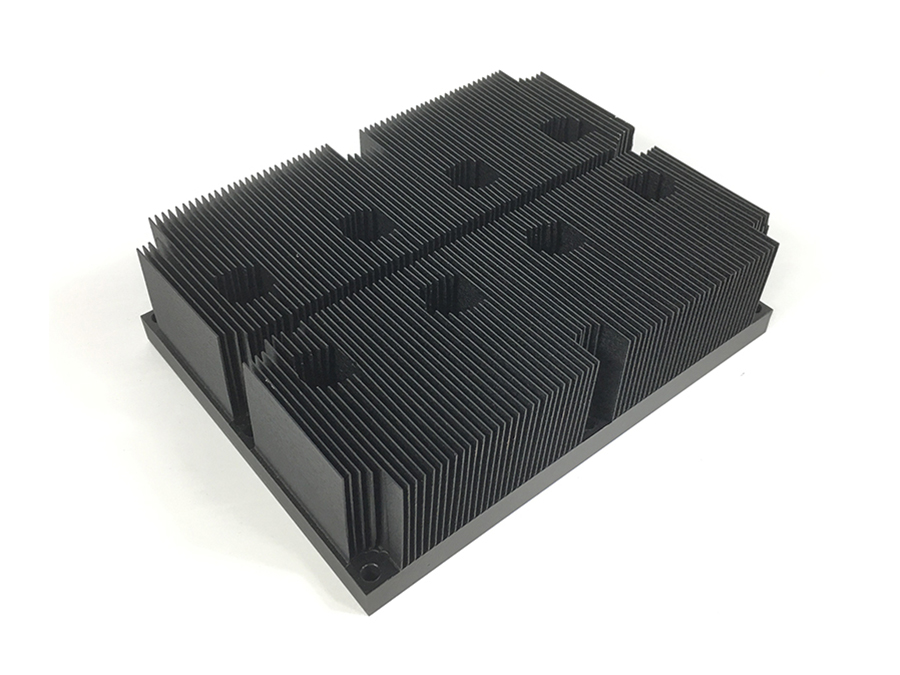
Why Specify T-Slot Aluminum Profile Standards?
T-Slot profiles streamline assembly in modular systems, common in robotics, automation, and furniture. Standardized T-slots ensure compatibility between tracks and sliders, reducing design complexity and assembly time. For overseas engineers, understanding these standards is critical to ensuring interoperability and reliability in international supply chains.
Key Criteria for T-Slot Aluminum Profiles
First, confirm the alloy designation: 6063-T5 is recommended for extrusion due to its formability, while 6061-T6 offers higher strength for structural applications. Next, specify the T-slot geometry—pitch (e.g., 8 mm (0.31 in)), depth (e.g., 6 mm (0.24 in)), and width (e.g., 4 mm (0.16 in))—confirmed against the drawing or sample. Additionally, consider the extrusion die limitations; fin height-to-pitch ratios are capped by the die design, affecting performance in high-power applications.
How to Specify T-Slot Profiles Correctly
Start with the application requirements: high-frequency vibration demands may require bonded/staked fins (though less common in T-slots), while dense fin arrays favor skiving for zero thermal interface resistance. Document the surface finish—anodizing (e.g., Type II for general corrosion resistance) does not alter the T-slot but enhances durability. Finally, include dimensional tolerances (e.g., ±0.1 mm (±0.004 in)) and material certifications (e.g., 6061-T6 OIML DIL 4.1). Always reference ISO 4349 or equivalent standards for T-slot dimensions.
Common Pitfalls to Avoid
Overlooking die constraints can lead to oversized T-slots, while mismatched alloy properties may cause premature failure in critical applications. Avoid specifying anodizing colors unless required, as standard black or clear is recommended for consistency. Also, neglecting fin pitch verification (e.g., 10 mm (0.39 in) for heavy-duty loads) can result in inadequate cooling performance. Always request pre-production samples to validate fit and function.
Final Recommendation for Sourcing
For custom T-slot profiles, work with manufacturers who can produce to drawing and provide pre-production samples. Foshan Chuangrongyao Metal Products Co., Ltd. specializes in skived fin heat sinks, aluminum extrusion profiles, and precision hardware, offering custom solutions with competitive lead times. Contact Mr. Huang at +86 150 9995 1623 or info@cryjt.com for technical consultation.
FAQ
Keep reading
Have a project to evaluate? Send us the drawing.
Request a Quote